Showing posts with label Kigali. Show all posts

Thursday, October 27, 2011

Remembering Rwanda.

When I studied abroad in Rwanda this past summer, my program created a Facebook group that included all the Mizzou students, as well as our colleagues from Nigeria, Burundi and Rwanda. Since the program ended in late July, many students have used the group to share interesting articles, videos or upcoming events that pertain to our study of the genocide. Today, someone posted a link to "Singing Praises of Rwanda," a short essay on the current state of Rwanda written by a resident of Kampala, Uganda.

Although the entire piece offers compelling praise for the major economic and social strides Rwanda has made since the genocide, this part in particular inspired a wave of nostalgia:
"The drive to the border town of Gisenyi through Ruhengeri is an experience every visitor to Rwanda needs, if only to dispel the notion that all these good things are just limited to Kigali. The road is excellent and with specially paved pedestrian sidewalks, the towns are clean and Gisenyi is undergoing great transformation with old building being brought down and a new town plan being implemented. The peace and quiet at the Serena Lake Kivu is incomparable to any get-away for a tired mind."
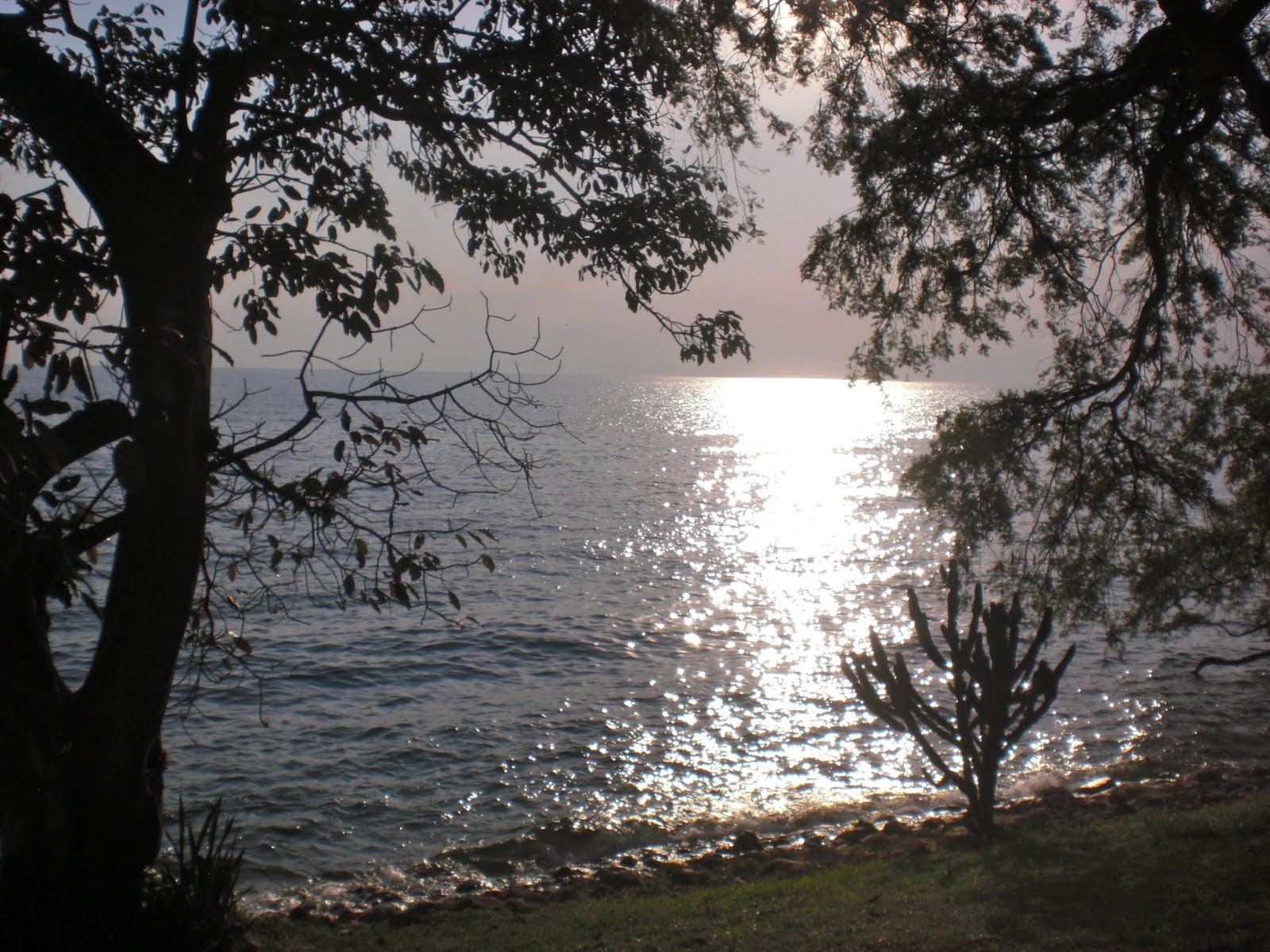
In case you forgot (or weren't around for the early stages of my blog), here's a little reminder of how gorgeous Gisenyi and Lake Kivu were:

Sunset at Lake Kivu. We stayed at a small convent right on the shore of this gorgeous lake.
The Democratic Republic of Congo is right across the water. 

More sunset.

 The next morning.


How did I get so lucky?

Tuesday, August 30, 2011

Welcome to the plains.

Wednesday, July 20

Today was the real transition between Rwanda and Kenya. Although there were differences between Kigali and Nairobi (size being the main one), they were both fairly modern East African cities. Today, we were finally seeing another side of Africa at Amboseli National Park in southern Kenya. We visited the local airport, where we hopped on a bush plane to fly us 45 minutes down to Amboseli, a national park located just north of the Tanzania border.

Our adorable baby bush plane. Look at the man on the far wing to get
an idea of how tiny it was.


On the way, we could see animals out the window, which got progressively more exciting. At first, right outside Nairobi, there was an occasional gazelle, but as we prepared to land in Amboseli, we saw elephants, wildebeest and zebras wandering the plains. A guide from our hotel, Serena Safari Lodge, was waiting for us at the runway when we landed. We paid our park admission fees and jostled off across the bumpy dirt roads to the lodge. I knew I was being “such a tourist” as I snapped pictures of every wildebeest, zebra and gazelle we passed, but I really didn’t care at that point.

This mama baboon carrying her baby waited at the side of the road
for our Jeep to pass before she began crossing.

When we arrived at the hotel, the staff greeted us with glasses of passion fruit juice and sat us down in the lobby for Mom to fill out her paperwork. That is one thing I have noticed is tremendously different between here and the U.S. – the service! Maybe I just don’t stay at as nice of places when I’m traveling in America, but the staff at the Serena Safari Lodge was unbelievably friendly and attentive. They pulled out our chairs and put our napkins on our laps for us at every meal, they kept our key at the front desk any time we left the room, and every time we visited the pool, someone was there within two minutes to serve us drinks. But the best part was that after you spoke with an employee once, that person would remember you and greet you personally every time he or she saw you after that.

Sunday, July 31, 2011

Next stop: Kenya!

Tuesday, July 19

Today we transitioned from Rwanda to Kenya. At the start of the day, I only had four things left on my to-do list with Mom:
  1. Avenir
  2. Bourbon Coffee
  3. Artists' market
  4. Ride a motorcycle taxi
We had decided not to visit Avenir or the artists' market because we were able to shop at both the open market and Ineza, and Mom wasn't too keen on the idea of me riding a motorcycle taxi in Kigali. So that left Bourbon Coffee, which they had at the airport. Bourbon is like the Rwandan version of Starbucks, but they have the best African coffee! It's made with chocolate and ginger, which was strange the first time I tried it because I'm only used to having ginger with sushi, but it was so, so delicious. After coffee, we breezed through security (no need to remove your shoes or separately screen your liquids here) and boarded our flight to Nairobi.

 Kenya Airways wasn't quite as glamorous as Ethiopian Airlines,
but it was still nicer than most American carriers.

After arriving in Nairobi, we got a taxi to our hotel and settled in. It was already almost 5 p.m., which meant daylight was winding down quickly. On the drive to the hotel, I had gotten the disenchanted impression that Nairobi was like a dirty version of New York City, with a lot more people on the sidewalks and worse drivers. But we wanted to experience the city a little, so I put a camera around my wrist and we walked a few blocks around the hotel. It was kind of fun for me, because I love weaving through people and finding the quickest way to get through a crowd. (You should see me with my suitcase in a busy airport; it's like a game for me!) Fifteen minutes outside was enough, though, so we returned to the hotel for dinner and went to bed, anticipating our 5:30 a.m. wake-up call to fly to Amboseli.

Me in front of the Kenya National Archives, which was within view
of our hotel room window.

The myth of Hotel Rwanda.

Monday, July 18

I had breakfast at Umubano Hotel with my mom again this morning. It’s a wonderful buffet with assorted meats, pastries (including delicious chocolate croissants), made-to-order omelettes and eggs, fruit, potatoes and – my favorite part – African tea and coffee. I never came here during my program because the 10,000 franc price was a little expensive for me, but breakfast was included with my mom’s hotel room, so it was a good deal.

I had crossed a few things of my “Fun to do with Mom” list the day before (Kigali Genocide Memorial Center, samosas and the open market), so today I showed her my daily walk to the CNLG building. It’s a 35-minute walk, and the difference between leaving at 7:30 and leaving at 9:30 was quite a few degrees, it seemed. By the time we got to the building and I showed her the hospital down the street where we ate lunch, it was time for a drink. We stopped in a small supermarket, where I chose an Apple Fanta, one of the few Fanta flavors I hadn’t tried yet during the trip.

We were also very close to Ineza, which I thought my mom would be interested in both for the authentic Rwandan goods and the income it provides to HIV-positive women. I was a little nervous just walking into the house, as I had Emmanuel with me last time, but the women greeted us as cheerily as ever and took us to the back room with the merchandise. My mom purchased a blue and yellow patterned shoulder bag, and we were on our way again. I wanted to take her to Avenir to get a traditional painting, but I wasn’t quite sure where it was and we were already tired (again). As we were walking back to the hotel, the IGSC bus drove by with several students. We noticed because Tyler leaned out the window and yelled, “Muzungu!” This is the word for “white person” in Kinyarwanda, and I believe a few other African languages as well.

Sidebar: Lauren decided my new name was going to be “Megundo.” In fact, I asked her how to spell my name one day (trying to trick her into thinking it had an “h”), and she unhesitatingly responded, “M-E-G-U-N-D-O.” I thought that was pretty funny, which in turn prompted me to think of a new name for my blog: Megundo Around El Mundo! What do you think? (Atlanta interns, I hope you’re still reading this!)

Of course, I had to stop by this statue during the walk to rep ADPi. Go Alphie! 

Close to the hotel was the Kigali China Great Wall Restaurant. I have been curious about foreign interpretations of Chinese food since I saw a presentation about it at a Griffiths Leadership Society Conference I attended at Mizzou. Jennifer 8. Lee (no, the "8" is not a typo), a New York Times reporter and author of ­­­­­The Fortune Cookie Chronicles, talked about the strange ways “Chinese” food is prepared all over the world. I’m sure you’ve heard Chinese food in America is actually nothing like Chinese food in China, so we decided to see what Chinese food in Rwanda was like. We weren’t too hungry, so we stuck with chicken fried rice. The weirdest thing to me was that there weren’t eggs in the fried rice. Isn’t that just steamed rice with chicken and veggies?

Saturday, July 30, 2011

Fun with Mom in Kigali.

Sunday, July 17

Today was my first full day with Mom in Rwanda! When she found out I had been accepted to the study abroad program in March, she mentioned wanting to visit Africa and the possibility of meeting up with me somewhere on the continent. It took a while for us to nail down our plans, but we finally decided she would come to Kigali for a few days, then we would fly to Kenya to spend some time at a safari lodge in Amboseli National Park. That way, I could get my meaningful, educational experience in Rwanda, but I could still do the "touristy" things like look at animals!

After breakfast, we went to visit the Kigali Genocide Memorial Center. We also took Kiela (who didn't get to go with us the first Sunday) and Tyler and Lauren, who just wanted to revisit and spend some more time at the memorial. I didn't think I would want to go back inside, so I brought my book (No Future Without Forgiveness by Desmond Tutu that I checked out of the IGSC library) to sit outside and read. But once I got there, I ended up walking through the exhibits again because I wanted to point some things out to my mom (like the chain that Bea's brother had been buried with). I'm glad I went through it again because I noticed some different things this time.

Apparently, the first the time I went through, I missed all the good stories. There was not much good that occurred during the genocide (obviously), but the memorial center did have a room dedicated to honoring those people who had saved lives during the genocide. One of the most memorable stories was about Frodouald Karuhije, a Hutu who thought the RPF was going to kill him. He dug a trench to hide in, but once he realized the genocide was being committed against the Tutsi, not the Hutu, he used it to hide 14 Tutsis from the genocidaires. His daughter and niece also helped by preparing meals and taking them to the Tutsis in their hiding spot. Similarly, Damas Mutezintare Gisimba saved people who had been left alive in the mass graves.

I was so thankful I went back through the center after I read these stories, considering they were the only comforting part of the enter memorial. I also noticed more tragedy this time, however. Did you know the number of foreign troops used in the evacuation of diplomatic staff and foreign workers would have been sufficient to stop the genocide? Neither did I. Or that after the Security Council agreed to established UNAMIR II on May 17 (about seven weeks before the genocide finally ended), the U.S. took over a month to provide the 50 armored personnel carriers it had promised? The French weren’t blameless, either (as we well know). In fact, they were partially responsible for the massacre at Bisesero. Over 50,000 Tutsis were hiding in these hills, until the French troops told them it was safe to come out. The interahamwe were waiting for them, and only 1,000 Tutsis survived.

I lost my mom somewhere in the memorial rooms at the end of the timeline. When I found her outside, she was pretty ready to leave. “I can’t believe you’ve been doing this for two weeks,” she said. I assured her we were not always surrounded by so many gloomy memories. We had been visiting cultural centers, learning about the government and enjoying our new friendships with the Rwandan students. But it’s true; the two weeks were hard, especially after we got to hear the personal stories of our own acquaintances there, including one IGSC student whose parents and six brothers and sisters were murdered during the genocide.

It was time to move on, then, so we went back into the city in the hopes of finding Aroma Café, a small shop we had visited one night for dinner. Tyler remembered its general location, so we had the cab drop us off at a familiar hotel and we walked until we found it. On the way, we passed the open market, which I had promised to show my mother. After lunch (samosas and a milkshake for me – yum!), the other students walked back to the apartments while I took my mom to the market. The kids loved her blonde hair. They followed us constantly, asking us to visit their stalls and holding up vegetables and other goods for us to evaluate. My mom wasn’t as timid as I was when it came to taking pictures, so I finally got some good shots of the market:


We (and by we, I mean Mom) purchased some decorative baskets to hang on the wall at home and a couple wooden bangles for ourselves. (I chose yellow and black, to show my Mizzou spirit during the upcoming fall semester.) By then, the time difference (nine hours from San Francisco) was starting to hit Mom, so we headed back to the hotel for a short nap before the closing ceremony that night.

The closing ceremony had been changed to earlier (originally it was the end of the third week), so Kiela and I got out our fabric to fashion some togas. Unfortunately, my fabric was not two yards. I guess I got swindled at the market! I found a couple wrap styles that could have worked, but then I learned the girls who had gotten traditional clothes made hadn’t received the finished products yet. I went with a sundress instead, as it was easier to wear and I wouldn’t be the only one not in “African” clothing.

Dinner was at a nice outdoor restaurant – wine included. After eating, all the students shared a little bit of their experience in Rwanda. I kept it short and simple: “I am one of those people who’s leaving early, on Tuesday, but had I known the wonderful experiences I would have and all the people I would meet and how much I learn, I would have scheduled to stay a little bit longer. But I am grateful for everything I have learned so far, and thank you all for being a part of that. And I can’t wait to come back some day.”

And we got T-shirts!

Ours loosely say: "How are you?" and "I'm fine."

Wednesday, July 27, 2011

Better than Harry Potter?

Friday, July 15

As you know from my previous post, I was pretty distraught about missing the Harry Potter premiere while in Africa. (I know, what a trivial complaint. Spoiled much?) But luckily, our gorgeous weekend trip that began today made up for that.

Unfortunately, the day started off on a sad note. Colbey left after our morning tea break to travel to South Africa, where he will be doing another study abroad program before school begins. I'm disappointed he didn't get to experience Lake Kivu with us, but I'm sure he's doing amazing things down across the continent!

Bye bye, Colbey! Have fun in Cape Town!

We visited the Gender Monitoring Office down the street from the CNLG building in the morning, had tea and then began the 3-hour drive to Gisenyi, a town on Lake Kivu at the northwest corner of the country. Our original plan had been to spend Friday afternoon at the lake and then visit Iwawa, an island that rehabilitates troubled youth by teaching them practical skills, the next day. Although IGSC had secured permission for us to visit the island, the Minister of Defense became concerned about American citizens visiting the island because one of their boats just got in an accident, and he didn't want to be liable if anything bad happened to us. When we left Kigali in the morning, we still didn't know if we would be able to visit Iwawa or not.

We also left a little later than planned, so Bea made sure we stopped to eat lunch on the way instead of waiting until we arrived in Gisenyi. This was an excellent decision, as we didn't arrive in Gisenyi until 5 p.m. The students were all staying at a convent right on the lake, and it was gorgeous. My first thought when I looked out at the lake was, "I can't believe I wanted to be home watching Harry Potter tonight." It was absolutely breathtaking, and the nuns set us up in quaint little rooms complete with bath towels and mosquito nets.

While we all wandered around the property and took about 1.37 million pictures of the lake, the nuns prepared some hot tea and biscuits for us. Lauren pointed out (very accurately) the tea tasted like Froot Loops, which might sound weird but was actually quite delicious. We then had dinner and bought a bottle of wine from the nuns for 2500 francs. Yes, 2500. That's a little over $4 in the U.S. Wow. And the nuns had made the wine themselves, which was pretty cool.

At one point, I said "murakoze" to thank the nuns for bringing us the food. Sister Francois got very excited and exclaimed, "You speak Kinyarwanda!" I quickly denied it before she could get her hopes up any further. "That's the only word I know," I admitted, which evoked a laugh from her.

I was pretty tired from the long bus ride, and we decided we wanted to be up early the next day to get to the beach as soon as possible, so I retired fairly early.

 This was the first view of the lake I had, which made me think, "Maybe this is worth missing opening weekend."

 And then the sun began to set ...

 ... and the view just kept getting better. What an appropriate location for a convent - who could look at this and not think there's a God behind all this beauty?

The U.S. Embassy reads Twilight.

Thursday, July 14

This morning was a little chaotic, as our post-tea break schedule did not go according to plan. In the morning, a man from the African Union spoke to us about the role of the AU in today's society. Unfortunately, like we've heard so many times before, the AU did not act to stop the genocide while it was occurring, but it has measures in place today to prevent another tragedy like it.

After our tea break, the schedule said we would have free time to use the library and work on our projects. Kiela and Colbey planned to go to the Kigali Genocide Memorial Center, which they missed last Sunday because they had still been en route to Rwanda. But some miscommunication and other problems led to the bus being M.I.A., which left them with no transportation. Additionally, Bea had scheduled a visit to a Catholic health clinic, which Colbey wanted to attend because he is pre-med. Basically, by the time anything got figured out, it was almost lunchtime. I decided to stay at IGSC and catch up on my notes and journal as much as possible.

After lunch, we visited the U.S. Embassy in Kigali and spoke to a political officer and a program officer from USAID. While waiting for our speakers, we sat in the library for a few minutes. It was there that I noticed there was a Twilight book on the shelf. Really? If I remember correctly, it was actually Breaking Dawn. Sad day. I'm comforted by the thought that maybe Harry Potter is in the British embassy!

Photo courtesy of SmugMug.

The embassy officers did not talk much about the U.S.'s role during the genocide but rather focused on what America has been doing since then to help Rwanda rebuild. The embassy has helped with the nation's changing needs by providing humanitarian and emergency aid directly after the genocide, then assisting with improvements in agriculture and AIDS prevention beginning around 1998, then developing justice and infrastructure beginning in 2000, and finally helping implement presidential initiatives beginning in 2004. I learned there are four government departments that offer jobs in foreign service: the Department of State, Department of Agriculture, Department of Commerce and USAID. New career path, possibly?

Also at the embassy, I suddenly realized that the graduate student on our trip was old enough to remember the genocide; she was actually graduating high school when it happened. I asked her what the public perception had been while the genocide was occurring. "We thought it was a tribal war," she answered. "We didn't think we should get involved." She added that by the time the atrocities were being broadcasted on the news every night, it was already late May (over a month into the genocide). It was only then that she and her peers started realizing something bad was happening, and they had let it slip by.

The day ended with dinner at Shokola, where we were able to order our own dishes instead of eating from the buffet we usually had at meals. I opted for the chicken quesadilla, "with onions, peppers, guacamole, sour cream and pico de gallo." I assumed this meant the quesadilla would have onions and peppers in it, with the other toppings on the side. As you can see from this picture, it was actually the opposite:


I felt a little lame for eating a quesadilla in Africa, but I decided I wanted to see what "ethnic food" was like in other countries. In addition to the strange switch in vegetables, the tortilla was very doughy, almost sweet. Overall, it was a good dinner!

Tuesday, July 26, 2011

We won three dollars!

Wednesday, July 13

A lot of interesting things happened today, so I will try to be concise and break up this post with subheadings:

From Voiceless Women to Representatives in Parliament.

This was the title of Professor Bea Gallimore's presentation at IGSC this morning. Bea - our own professor from Mizzou, developer of the Rwanda study abroad program and a co-founder of IGSC - received her graduate degree in linguistics and has used that academic background to study women survivors of the genocide in Rwanda. I found this lecture fascinating, both as an admirer of language and a woman myself. Furthermore, I am doing my final project for this class on women in post-genocide Rwandan society, so the information was very helpful in giving me a foundation for my paper.

A highlight of the presentation for me was the revelation that there is no word for "to rape" in Kinyarwanda. Instead, Rwandans use other words or euphemistic expressions to describe the crime, such as kubohoza, which means "to acquire by force, to make free, to loot," and guhohotera: "to impose injustice on someone." I was appalled to learn that another word they use for rape actually means "to marry": kurongora. This led to a further discussion, in which I learned that women cannot take the active voice for kurongora, only the passive. Therefore, women can never marry, but they can be married. Sexist much? Similarly, the only verb a woman can take actively is gusambana, which means to make love. Unfortunately, in Rwanda it has the connotation of the f-word and is viewed as a dirty word for copulation.

This lesson was very interesting to me and made me wonder what linguistic rules we have in English that would be strange to people of different cultures and native languages.

Aid for women with AIDS.

After our morning lectures, several other students and I walked over to Ineza, a nearby business, to purchase some gifts. Ineza is an organization that helps women affected by HIV/AIDS to make a living by selling various fabric products. Emmanuel escorted us to the house where the goods were made and sold, where we saw about 15 to 20 women sitting in the living room sewing. They waved and greeted us as we came in, and two older women took us to the room in the back where the products are on display.

They had everything from duffel bags to luggage tags and oven mitts to men's ties, in fabrics of all colors and patterns. I purchased a laptop case with a yellow, red and blue pattern for 8,000 francs, which is roughly equivalent to $13. Considering the laptop cases I had been looking at in the U.S. cost around $20, I was more than happy to purchase a case that would both help these women generate income and serve as a reminder of my time in Africa. After I completed my purchase, the woman who collected my money (who didn't speak much English) hugged and thanked me. It was truly a gift to see how grateful these women were for our business.

This is the sign that was displayed outside the gate to Ineza.

Widows and orphans of the genocide.
 
Instead of returning to the CNLG building after lunch, we walked next door to AVEGA, an organization for widows and orphans of the genocide. (We had already visited the organization once, for a memorial service.) The speaker explained that AVEGA was organized by widows in 1995 to address problems they were facing after the genocide. They didn't have any property or anywhere to stay, and they basically had to start at zero to rebuild their lives. AVEGA offers the following services for widows and orphans:
  1. Medical - AVEGA has started three health centers, including one at the location we visited. They offer assistance for rape victims and women with HIV, plus trauma counseling.
  2. Social - Among other things, AVEGA helps secure assistance for elderly women who have no children to take care of them.
  3. Justice/Information/Advocacy - AVEGA provides legal officers to help women secure property and assert their inheritance rights. These officers accompany the women to court when necessary.
  4. Capacity-building - Some of AVEGA's income-generating projects include jewelry making, beekeeping and starting small businesses. These projects also help AVEGA make loans to widows.
During the presentation, the speaker had mentioned that though men could not be members of AVEGA (the organization means "Association for Widows of the Genocide" in French), there is one man on the national board, along with nine women. (The speaker himself was also male.) One of the Rwandan students from IGSC found this to be unacceptable. He kept asking the speaker why there was only one man on the board. I'm not sure why he was so focused on this detail, but finally, another IGSC student became exasperated and said, "It's a women's association!" The speaker also asked, jokingly, "How many men do you suggest we have?" I'm not sure why this discussion became so heated, but most of the students found it amusing.

Too bad I didn't have any USD.

After dinner, some students were really craving ice cream. Emmanuel, my roommates, another Mizzou student named Tyler and I headed down the street to purchase some ice cream cones at a small market. After we had our snacks, Kiela shared her desire to visit the Casino Kigali, located in a hotel not far from our apartments.

That's me, hiding in the shadows to the right!

Once inside, I was surprised to see the machines only accepted U.S. dollars. I guess American tourists are the only ones who like to gamble? Unfortunately, I wasn't carrying any American money on me, but Emmanuel had a $10 bill. He loaned it to Tyler to try his hand at video poker. Very quickly, Tyler had won about $3, to bring his total to $13. (Actually, he had $13.80, but the casino truncates.) We waved down an attendant, who spent a few minutes trying to convince Tyler not to cash out.

"But you only have $13," he told Tyler. "You've only won $3."

Tyler insisted that he knew that, but he didn't care. "I have more than I came in with, so I'd like to cash out." It took a little while - and a small fib about Tyler needing to leave because he has gambling problems - for the attendant to finally give Tyler his $13.

Oh, and as we left, the elevator shut on me. Like, the doors pinned my arms shut and didn't automatically open back up again like normal elevators. But obviously I lived, and I still have both arms. Success!

It is what she said.

Sorry I am so far behind with my writing. But my goal is to catch up before August 1 because:

1) I head back to school on August 5 and then I know I’ll never catch up.
2) My journal (aka this blog) is due to my professor on August 1, so I don’t really have a choice.
3) I just spent an amazing three days in Kenya, and I want to tell you all about that, too!

So, to finish out my last week in Rwanda:

Tuesday, July 12

Today continued more discussions on religion and what specific groups did (or didn’t do) during the genocide. After a pretty statistic-heavy presentation about the Gacaca Court (Rwanda’s local way of dealing with perpetrators after the genocide, excluding organizers and perpetrators of sexual abuse, who are tried in the UN’s International Criminal Tribunal for Rwanda), we had a Muslim leader speak to us in the afternoon.

The speaker began by describing the historical relationship of Muslims and Rwandan leaders. Traditionally, relations between the colonial administration and Muslims were tense. Muslims could not be educated in Rwanda unless they adopted Christian names, so many Muslim parents were hesitant to enroll their kids because of fear of conversion. Muslim Rwandans, while not classified as either Hutu or Tutsi, traditionally sided with the Tutsi group because they both felt persecuted after the Hutu government took power in 1959. During the genocide, many Muslims hid Tutsis in their mosques. Whereas those who hid in the churches were usually massacred, Tutsis who hid in mosques were not attacked. Muslim leaders also preached against the genocide, reminding Rwandans not to murder their brothers and sisters.

However, this is not to say that Muslims were blameless in the genocide. While it is true that there were Muslims who hid Tutsis in their homes and saved them, there were also Muslims who participated as genocidaires. (Just as there were also Christians who helped Tutsis hide from their killers.) In fact, one person in the classroom testified that her family was murdered by a Muslim in 1994. The thing that surprised me the most was that the author of the "Hutu Ten Commandments" - a propaganda document from 1990 encouraging the Hutu to recognize their superiority over their Tutsi neighbors and destroy the Tutsi influence in Rwanda - was a Muslim. To be clear, I don't blame Islam as a religion or Muslims as a group for this document; it is the responsibility of the specific people who wrote and published it. However, I am a little disappointed that the general public is always so willing to criticize the Catholic Church and other Christian groups for their condemnable behavior during the genocide, but after months of studying this is the first time someone mentioned the author of the Hutu Ten Commandments - arguably the worst thing released in the media to instigate the genocide - was a Muslim. It makes me wonder why people are so quick to blame the Pope but ignore people of other religions who failed to step in or directly encouraged hatred and murder.

On a lighter note (of course), I wanted to include a picture of my roommates on the trip. For dinner on Tuesday, we went to a new restaurant (adorable, nice outdoor eating area, really yummy tortillas) and took some pictures outside.

The roomies: Lauren, me, Colbey, Kiela.

A lesson in American humor.

And finally, you might be wondering about the title of this post because nothing so far has been relevant. Well, we've been trying to teach our Rwandan friend Emmanuel some American humor, namely "That's what she said" and sarcasm. Unfortunately, we introduced him to both at the same time, which caused some confusion. Now, every time I say something that provokes a laugh, Emmanuel responds with, "It is what she said," even if the joke was not suggestive.

Likewise, any time someone tries to use sarcasm on Emmanuel, he doesn't sense it and gets offended. For example, one day he asked Kiela if he could sit by her at lunch, and she said no.
  • Emmanuel: "Oh, I'm sorry, is someone already sitting here?"
  • Kiela: "No, I just don't want you to sit here."
  • Emmanuel: "Really?"
  • Kiela: "I would rather have you sit somewhere else."
At this point, Emmanuel was looking rather distraught, so I jumped in from across the table to tell him: "Emmanuel! Sarcasm." He looked questioningly at Kiela and asked, "Really?" We all began laughing, and she told him that of course he could sit down. He was very relieved, saying, "Good. I was going to say, 'You really offended me.'"

He has gotten better at recognizing sarcasm, but he still confuses it with "That's what she said." Whenever he correctly identifies sarcasm, he follows up with, "It is what she said," which by now is almost as funny as the original intention of the joke anyway.

Sunday, July 17, 2011

Echoes of peace.

Monday, July 11

After a busy and emotional weekend, we returned to our normal schedule of morning lectures at IGSC. The religious discussions weren't over, though, as our speakers today included a Catholic priest and a Presbyterian minister. I had really been looking forward to hearing from members of the religious community, especially after how little the churches did for the Tutsi during the genocide, but I was really disappointed by the priest's presentation. First, he was extremely difficult to understand, so I didn't catch most of what he was saying. Second, I felt his points were very convoluted, and he seemed to be trying to dodge blame to the extent he wasn't very helpful in his explanations when students asked questions.

One strange thing that came out of the lecture was the idea that genocide is not a sin in the Catholic Church. Maybe I missed that part of the presentation (like I said, he was difficult to understand, which therefore made it hard for me to concentrate), but I'm pretty sure that is inaccurate. After all, if murder is a sin (and it definitely is), why wouldn't murdering thousands of people of a single ethnicity be a sin? I think he was trying to say that the Catholic Church as an institution did not accept responsibility for the genocide, but it wasn't presented that way. As I already mentioned, I believe in personal responsibility, and I don't think it's the Church's fault that some priests decided to betray their congregations any more than I blame the Church when a priest decides to molest a little boy, but I don't think he presented his argument very well.

While looking for pictures for this post, I stumbled upon this interesting article comparing the Pope's reaction to Irish priests who have molested children to priests who led massacres during the genocide.

The altar at Nyamata Church, which we visited yesterday, surrounded by victims' clothing.

Strawberry Fanta!

And on to less serious and more touristy topics....

After lunch, several of us went to the open market to get fabric for our closing ceremony dresses.  I was able to get two meters of a "traditional"-looking green, yellow and blue print (the colors of the Rwandan flag) for 2,500 francs. I tried to negotiate down, but failed. Oh well, most of the shopkeepers had been starting at at least 3,000, so I still thought I got a good deal. After purchasing our fabric, we went to visit a tailor. At least, I thought we were visiting a tailor. Instead, we picked her up in a very crowded area of Kigali and pulled into a small parking lot so she could fit us on the bus.

Amusing? Yes. Hot? Definitely yes.

Because my roommate Kiela and I are leaving during the third week and still didn't know if the closing ceremonies were being rescheduled for earlier, we opted not get something made and just fashion ourselves a toga if needed. (The toga-making skill is only one of the many benefits of being in a sorority. Ha.) While everyone else was being fitted in the bus, we left with Colbey (another roommate) to walk around this new area of the city.

During all our meals so far in Rwanda, our beverage options have been: Coca Cola, Citron Fanta, Fiesta Fanta (grape), Orange Fanta, Sprite and water. We had heard of the elusive Strawberry Fanta, but hadn't had the opportunity to try it yet. While strolling down the street, we found some! And purchased it, of course. With a chocolate bar. Yum. And drank it. And took pictures of this fabulous experience.

Kiela got a Coke. And now she regrets it. Lame.

Art After the Genocide

Our evening schedule was a little different today in that we had another classroom meeting before dinner. We had two guest speakers/performances visit us. First, we heard from a group that makes documentary films about the genocide. They spoke briefly about the process and then we watched their most recent film, which included interviews with survivors of the genocide.

The second presentation, a Rwandan theater group called Mashirika, was amazing. The woman who led the informational presentation was very well spoken, and the performance itself was unbelievably touching. It was a kind of interpretative storytelling, for lack of a better term, in which one young woman recited a monologue about the genocide as another young woman and two men danced slowly behind her. The story wasn't her own, but she performed it so well I didn't realize that until the end. She spoke of seeing the river full of Tutsi bodies, including an infant caught against a rock. Her voice rose to almost unbearable levels as she asked:

"What kind of man would kill a baby? A man like you?
Or a man like me?"

After the monologue, the female dancer in the background began singing a gorgeous (and surprisingly uplifting) song called "Echoes of Peace." I'm going to try to find it for my iPod; it was that good. It was definitely the best session we had at the CNLG building so far.

I found this poster on Mashirika's website. This particular quote really hit me during the slide show we watched before their performance. Also, the man in this poster was one of the dancers we saw.

Thursday, July 14, 2011

And the Pope sent a rosary.

Sunday, July 10

Today continued our weekend of thought-provoking memorial sites and harsh reminders of the reality of the genocide. Today also forced me to really think about the Catholic Church and its role in the genocide, which was disappointing at best and condemnable at worst. As one of the few Catholics on the trip, it was enlightening to hear what my friends (some of whom are atheist) thought of my institution's behavior.

Nyamata Church

Once again, we drove outside Kigali to see the memorial site at Nyamata Church. Pictures were not allowed, but a Google image search brings up plenty of photographs. During the genocide, more Tutsis were killed in churches than in any other place. Over 2,500 people died inside Nyamata Church alone. The gate to the church is still missing bars where the Hutu genocidaires deactivated an explosive to get inside. With only one door, the church trapped everyone who was hiding inside. The genocidaires threw grenades into the packed church and then finished the living off one by one with machetes, as they still had no way to escape.

Today, the pews inside the church are piled high with clothes from the victims, which were removed from the excavated bodies for inclusion in the memorial site. Narrow beams of light from the bullet and shrapnel holes in the ceiling dot the floor. Our tour guide pointed out blood spatters on the back wall, where the Hutus swung infants by their legs to crush their skulls against the brick. Perhaps the most eerie image of all was an intact statue of the Virgin Mary perched midway up the wall, holding her rosary and looking down over the catastrophe.

Speaking of a rosary, the rosary the Pope sent after the genocide is also on display in Nyamata Church. That rosary is the only thing the Pope sent to the people of Rwanda after the genocide. (I'm especially disappointed in this because Pope John Paul II was a pretty cool guy, especially as far as tolerance and progressiveness in the Catholic Church is concerned.)

Photo courtesy of Pinterest.

Outside the church is a grave site for an Italian woman who had regularly helped protect the Tutsi before the genocide. Many people don't know this, but massacres of Tutsis began occurring in Rwanda in 1959 - not 1994. Because churches had previously been safe havens for Tutsis to hide in during earlier conflicts, they thought they would be safe in places of worship again. Unfortunately, the woman was shot on her doorstep by Hutu extremists in 1992, so she was no longer able to provide assistance to the Tutsi of that area during the genocide. As we observed a moment of silence, a church in the distance began singing, quietly but audibly. I was reminded of my experience at Murambi the day before.

Finally, we visited the mass graves behind the church. You can actually walk down into the graves, where the skulls, femurs and other bones are laid out on their own shelves. The skulls had clear gashes and breaks in them where they were crushed with machetes, and the amount of bones laid side by side was sickening. Again, I noticed the purple and white religious clothing hanging at the base of the staircase into the grave, a harsh contrast for a Christian like myself to reconcile with the bodies laid beside them. (More on that at the end of this post.)

Survivors/Genocidaires Co-Op

We had originally planned to visit the nearby Ntarama Church as well, where an estimated 5,000 Tutsi were murdered. However, the group elected to skip the second memorial and instead head to a neighborhood where Tutsi survivors and Hutu genocidaires live as neighbors. This was especially interesting to me because it was the first time I got to hear a genocidaire share his (or her) side of the story.

I first began to seriously wonder about the Hutu perspective and motivations when I watched Beyond the Gates for one of our pre-trip classroom sessions. In the film, there is a young Hutu man who works at a school that later becomes a refuge for Tutsi villagers. When the president's plane is shot down, a British teacher who works at the school asks the man what is going on. He responds that the Tutsi are going to take over the government again and turn all the Hutu into their servants. It made me curious to see what other reasons the Hutu had for attempting a complete extermination of their Tutsi countrymen.

At the co-op, a genocidaire named Matthew gave us three reasons for his participation in the genocide (he killed six members of a local pastor's family, burned some Tutsi homes and stole their livestock):

1. The encouragement of the local leadership. (Remember that the genocide in Rwanda was state-sponsored.)
2. He said he did not hesitate to follow their commands because he had been told all his life that Tutsis were his only enemies. They were wealthy and had lots of cows and property, while the Hutu were poor. He believed if he took the Tutsis' property, he would be relieved from poverty and never have to go hungry again.
3. The government threatened that if a Hutu did not participate, he would be killed himself.

I can't say I find that to be a satisfying justification for what happened - I don't think any reasoning would be adequate - but I also realize I have never been in his position. I'm curious to know, what do you think about his response?

After the genocide, Matthew spent nine years in prison for his crimes. He was then asked to reconcile with the pastor whose family he had murdered, and the church set up this co-op for survivors and genocidaires to live together. Today, they claim their children grow up not caring whether they are Hutu or Tutsi. I hope for the children's sake that their parents are right, and not just using "reconciliation" as a facade for lingering animosity. The kids were pretty cute, though, and they loved getting their picture taken:


Post-Genocide Faith

At the co-op, we were also able to hear from a survivor, Jacqueline, who is mentioned in this recent article from the BBC. (I recommend you read it if post-genocide society is interesting to you at all.) One member of our group asked her how she was able to keep her faith even after her family was murdered in a local church, and how she was able to reconcile with the killers living next door. She answered with two Biblical examples that most Christians are familiar with:

1. The story of Zacchaeus, who waited in a tree to see Jesus until Jesus asked him to come down and be with him. Jacqueline said she needed Jesus to invite her back to Him in order for her to forgive her family's killers.
2. When Jesus was on the cross, He was able to forgive His killers, saying: "Forgive them, for they know not what they do." (Luke 23:34)

Disclaimer: The rest of this post is pretty personal. If you feel uncomfortable discussing religion or have your own very strong religious beliefs, don't feel obligated to continue reading.

It was extremely moving to hear how a woman who had lost so much could still keep her faith. I am fortunate to have never had my faith tested in that way, but I would hope that if I suffered as she did, I would be able to find something in Christianity to hold on to. As Catholics, we believe in free will, and I personally believe in individual responsibility. I know God did not kill those Tutsi; the genocidaires did. Yes, God could have stopped it, but I don't think that's His role in the world. At the risk of sounding too "Bible-pusher"-y, I will say that we are not meant to understand everything that happens in this world. I do wish the Catholic Church as an institution would have done more to prevent or at least speak against the genocide as it was occurring, but there are a lot of things the Church does that I don't necessarily agree with. I believe any church, like any human institution, is fallible just as humans are. It doesn't mean I believe in the existence of God any less or have any less reason to appreciate all the wonderful things He does do for this world. It just means I have to work harder to understand why this happened and what the message is intended to be.

I'm usually not very vocal about my faith; I don't typically discuss religion beyond an educational/informative perspective because I know it's a very sensitive topic, and I believe people should be able to practice whichever faith gives their life purpose (within proper boundaries, of course). But this trip has forced me to think about difficult questions such as: What kind of God would let this happen? Where was Jesus when the Tutsi needed him? And so on and so forth.

The experience I had today was quite a contrast to a conversation I had with a fellow intern in Atlanta just last month. I hadn't mentioned it in my blog yet, but it has really stuck with me, so I'll mention it now. This particular young woman has an extremely strong faith in God, and Jesus really is an integral part of her everyday life. I asked her about it one day because I get the feeling that type of visible faith is more prominent in the Southern culture. She answered me in this way:

When you first get a boyfriend, all you want to do is talk about him. When I think about Jesus and how awesome He is, I can't help but want to talk about Him, too.

When I think about this friend's strong sense of faith, it reminds me how much I admire all the Rwandan people today who can continue to worship - sometimes even in the churches that failed to protect their families and friends - despite all the tragedy they have experienced. I truly hope that everyone who is affected by the genocide (or a similar hardship) has found a way to cope, whether that is through religion or something else, and that they can lead a content, healthy life despite their past.

Wednesday, July 13, 2011

Apparently senators like champagne.

Friday, July 7

I had been looking forward to the Friday lectures because our guest speaker was Margee Ensign, the president of American University in Nigeria. I had read several excerpts from her book for my synopsis (a 5-page preliminary paper about our final project to be submitted before we arrived in Rwanda), so I wanted to see what see had to say in person. She has a pretty unique perspective of Rwanda when it comes to the country's reconstruction after the genocide. Her book, Rwanda: History and Hope, was originally supposed to be published by the Columbia University Press, but they didn't especially like her chapter on the post-genocide political development in Rwanda.


Dr. Ensign said her editor doubted her portrayal of the current government in Rwanda, so she asked him to find one sentence in her book that was not backed up by fact. Her editor responded that facts were not the problem. Instead, she was told: "It's the only voice out there, and we can't take that risk." So she got it published by the University Press of America instead.

After her presentation on the material covered in her book, we were lucky to have Dr. Ensign tell us a few stories of her personal experience with post-genocide Rwanda. One story she related involved the Gacaca Courts, a local level of trials instituted by the state to try the genocidaires in a quick and fair fashion. While teaching in the U.S., Dr. Ensign had a Rwandan student who left to go home, because he told her he thought his family was going to be killed. (This was at the very beginning of the genocide in April 1994). When she was in Rwanda years later, her student's mother's murderer was on trial in the Gacaca, so she went for support. After the genocidaire was sentenced to 20 years in prison, Dr. Ensign asked her former student how he felt. He responded:

"Justice has been done today. I feel free."

It was powerful to hear from such a strong woman, who not only has very close ties to Africa (as the AU president) but also has personal experiences with the aftermath of the genocide. She is truly an inspiration. She ended her presentation with an amusing story about the people in her office at American University, who would always call her "sir." She finally asked why one day, and they told her: "It is because you are doing a man's job." And doing it quite well, might I add.

The river of Tutsi.

For dinner on Friday, Senator Kagabo (who lectured in class on Wednesday) invited us to his home outside Kigali. It was our first trip outside the city, and it was wonderful to see what other parts of Rwanda looked like. We drove through some big fields with banana trees and schoolchildren who would bang on the windows and chase our bus excitedly. I saw lots of smaller, "traditional" homes with blue doors (I don't know what it is about the blue doors here, but I just love them) and women outside with their babies swaddled on their backs (remember this?). Some grown men even chased the bus at a few points, laughing with the young girls and reaching to touch the windows.

 This isn't from that night, but I took a picture of a blue gate by the hospital where we eat lunch, and I wanted to share it with you.

Eventually, we made it out to the senator's home, which was literally at the end of the road. He had a group of tables and chairs set up for us in his backyard, but first he took us to the edge of his property, where there was a beautiful view of the river. He told us about the role of rivers in the genocide, when the Hutu were told to throw the bodies of their Tutsi victims into the river, so they could go back to Ethiopia, where they came from centuries ago. Sometimes his friends will ask him why he, as a Tutsi, chooses to live above this tragic river. He answers it is so that he can keep watch and ensure a Tutsi will never be thrown in again.

After several hours of sitting and talking and playing with our camera settings in the almost pitch-black backyard, we ate kabobs of goat meat and cow intestines. Yum. But seriously - I love goat meat. The cow intestines were a little chewy, but they basically tasted like barbeque, so they were doable. Finally, the senator popped a (huge) bottle of champagne and we danced to Congolese music until it was time to return home for the night. Only negative: It was too dark to admire the scenery on the way back into the city.

Tuesday, July 12, 2011

"Sister! I make you good price."

Thursday, July 7

Today, we had the opportunity to visit an open market in Kigali. Exciting! There were so many sights and sounds and smells; it was unlike anywhere I have ever been. First, there were the long sheds that housed counters covered with vegetables, fruits, mounds of flour on burlap sacks, piles of beans and other dry goods, etc., etc., etc. There was also an adorable small child playing on a barrel by the street, but I didn't take a picture because I didn't want to offend his mother, wherever she was. Speaking of which, some of the Africans in the market asked another student to pay them to take pictures, so I didn't want to take many pictures for fear the people would think I was trying to get shots of them. I did try to surreptitiously take a picture of the market as we walked by, but I failed miserably:

 
Along the side of the market were small shops and carts loaded down with imported goods, from backpacks to cell phones to "Barbarry" watches. Of course, I wasn't interested in that stuff; I can go to Wal-Mart when I get home. I was very interested in the plethora of fabrics at the market, however. Many of us (mostly the girls) want to get some traditional Rwandan clothes made for our "Closing Ceremonies" at the end of the program. Right now, it is scheduled for the third week, but as some of us are leaving earlier, our professor is trying to change it. I decided to wait on buying any fabric, but here's a sample of some of the gorgeous patterns:


Behind the fabrics and jewelry was the meat area. AKA: Carcasses were hanging everywhere. Yum yum! Overall, I loved being at the market, but I was really uncomfortable with the shopping process. Women were constantly calling to me, "Sister! Sister!" and waving me into their specific areas. It was hard to say no because they all sounded so excited. One woman even started to cut a piece of fabric that I liked, and I had to tell her, "No! No! I don't know yet..." at which point she made a pouty face. I know I just need to get over it, but I think I'll stick to sticker prices for a while.

There was a huge stack of colorful mattresses across the street. I just thought it was funny and worth a picture.
 

Genocide and the Holocaust

To completely switch tactics, our first lecture on Thursday (before the market in the afternoon) was about Holocaust (and genocide) denial. It still blows my mind that people genuinely believe the Holocaust didn't happen. I assumed everyone had to believe the genocide of the Tutsi really occurred because of how much video and other evidence we have from 1994, but there are those who insist it did not exist. And I don't just mean that it wasn't a genocide - I know that's a very loaded word - but that there are people that don't think mass killing occurred at all.

After the lecture, we got into a discussion about the Holocaust compared to the Rwandan genocide. I didn't speak up in class, but I will share my thoughts now. Some people argued the world "cares more" about the Holocaust because the Jews were white, and people identify more with their brothers than their neighbors. Others mentioned that the Holocaust lasted longer and killed more people. I, however, think the Holocaust is mentioned more in history (at least in American curriculum) because it occurred in Western Europe. Africa has historically been perceived as "uncivilized" and "savage" by the rest of the world, so I think many people (especially older historians and educators) "expect" mass killing in Africa, but they don't expect it from somewhere as "civilized" and urban as Western Europe. Sorry to use so many quotation marks in this paragraph, but I want to stress this is obviously not my belief; I know Africa is civilized. But those are the traditional views held by the Western world, which are hopefully changing in today's society.

There's a hole in my mosquito net!

Wednesday, July 6

Now that we had already been to the CLNG building once (where our classes are located), a few members of the group decided to walk to class Wednesday morning. We gave ourselves an hour just to be safe, but our stop at the coffee shop took longer than expected. We're used to Starbucks' counter service, but here in Rwanda they like to make it an experience, meaning you sit and have a waitress, even if you're getting coffee to go. So at 8:35, as we were walking down the street, our bus pulled up by the side of the road. We were late. Oops. The bus drove us the rest of the way, and we had to start class a little late. (Note: We have now timed the walk and it takes about 36 minutes. So we don't stop for coffee, and we haven't been late again.)

Just for your information (if you continue to read my blog), a typical weekday for this program is set up like this:
  • 8:30 - 10 a.m.: Guest speakers/lectures, part one.
  • 10 - 10:30 a.m.: Coffee/pastry break!
  • 11 a.m. - 12 p.m.: Guest speakers/lectures, part two.
  • 12 p.m. - 2 p.m.: Lunch and rest.
  • 2 - 4:30(ish) p.m.: Visits to organizations/memorial sites/etc. or another guest speaker.
  • 4:30(ish) - 7 p.m.: Free time, shopping, cultural experiences, etc.
  • 7 p.m.: Dinner.

Our first speaker on Wednesday was Jose Kabago, a former professor and current Rwandan senator, who lectured about the history of the country and genocide in particular. Although he shared a lot of good information, I found the post-lunch session to be much more interesting and helpful to my understanding of Rwandan society as affected by the genocide.

Mr. Ngoga Aristarque from the Association of Rwandan Student Survivors of Genocide was our second speaker of the day. This association (abbreviated GAERG in Kinyarwanda) aims to make Rwanda "a beautiful, shining country proud to be inherited by a healed, confident, motivated, hopeful and successful generation," according to a handout he gave us. The association was created after the genocide for students because many of them had lost their families in the genocide. Through GAERG, the students are able to get new families, composed of a mom, dad and multiple children. One of the IGSC students who has been traveling with us has 26 students through this organization. Although the children can be older than the parents in some cases, they are expected to adopt the traditional roles of their place in the family. For example, the parents are caregivers for the children, who in return respect and obey their parents, and it becomes "a real kinship," as Ngoga said. "We create a relationship to be in the place of those who were killed in the genocide." In fact, Ngoga is going to be in his GAERG sister's wedding this summer, and their father from the organization will give her away.


The main objectives of GAERG is the commemoration and prevention of genocide in Rwanda, so another major thing the organization does is to commemorate those families that were completely wiped out by the genocide. Since 2009, GAERG has sponsored an event to remember those families that have no living relatives to remember them. The organization also conducts a census in different districts to try to get a number of how many such families in exist. For example, in Karongi District alone, almost 3,000 families totaling over 13,000 people perished. The census gathers information from neighbors who might remember their names, which can then be read at the event. When possible, their pictures are projected and their place of death is identified.

In addition to all these statistics, Ngoga's presentation led to a very difficult discussion. He mentioned that he personally would not be able to marry a Hutu woman after what happened, even today. This raised some questions from our IGSC students that are not Tutsi, who wanted to know what type of reconciliation would be necessary for him to be able to interact with a Hutu on that level, at which point our professor asked, "Does the reconciliation need to be coming from the survivor?" This discussion made me realize how recent the genocide really was. Most of the people who survived the genocide are still alive today; they remember the atrocities that were committed; they recognize their family's killers. I can't think of anything analogous to this in America, as the most severe racial tension I can think of - slavery - was so long ago that no one alive today can remember it, nor even their parents or grandparents.

And finally, I have to include a picture (or two) to leave you on a happier note:

We got mosquito nets in our apartments Wednesday night. We had quite a fun photo shoot inside the bridal-looking nets.


And then of course I found a hole. Oh well. That's why I take my doxy daily. Good times in 221B.